
Provider to hosted application
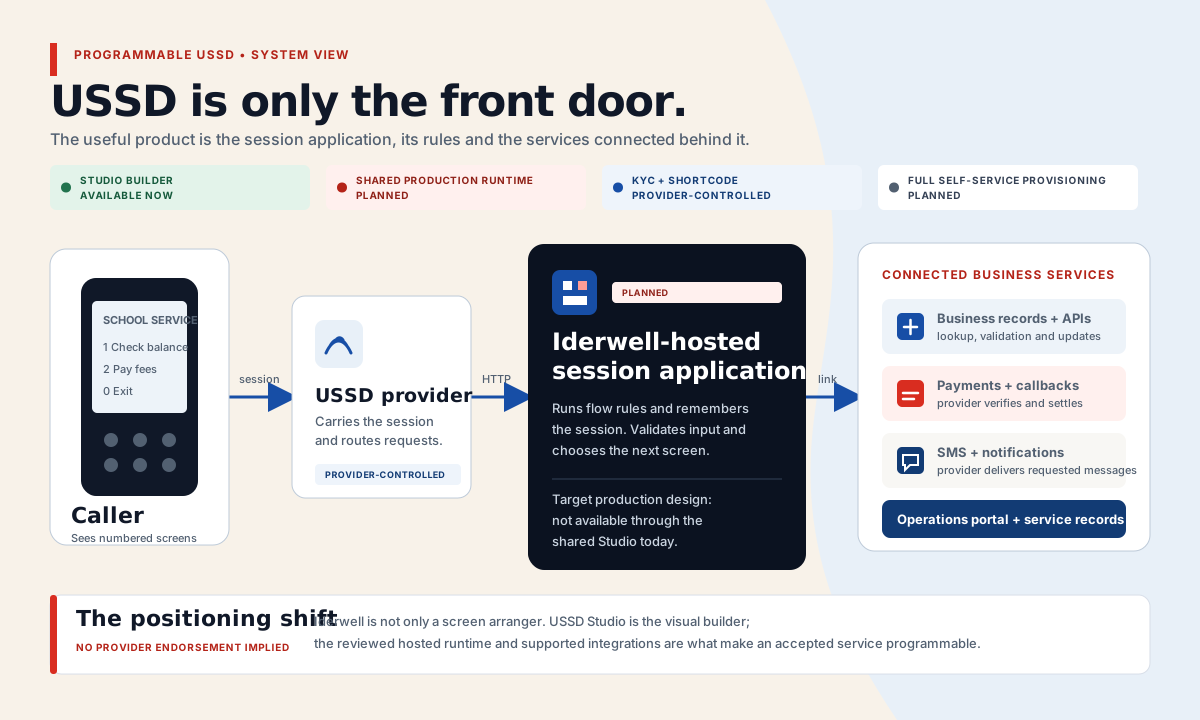
The telecom provider sends each approved USSD request to the hosted session application and receives the next screen in return.
Beginner guide · Updated 20 July 2026
The numbered screen on the phone is only the visible part. Behind it is a session-based application that interprets each reply, follows rules and can connect approved business services.
The complete system
A useful USSD service is not stored inside the caller’s phone. The mobile network and provider carry the live session; the hosted application returns each approved response.
Hubtel’s public terms also describe USSD as a live session connected to a customer application through HTTP. Read Hubtel’s public USSD terms.
The network opens a session and sends the approved request through the provider connection.
It may show a welcome message, numbered choices or a request for typed information.
The application validates the answer, remembers where the caller is and follows the relevant rule.
The application returns another screen or a final response. Later provider callbacks may still update the business record.
Three meanings of integration
A production service usually has a provider connection, a business-data connection and one or more result-driven services.
The telecom provider sends each approved USSD request to the hosted session application and receives the next screen in return.
The flow can look up or update the supported customer, booking, order or account record needed for the next decision.
Approved providers perform their part and return a result. The software records that result before it confirms or fulfils the business action.
Worked example
Studio safely simulates the conversation. A reviewed live implementation would need approved records and provider connections behind it.
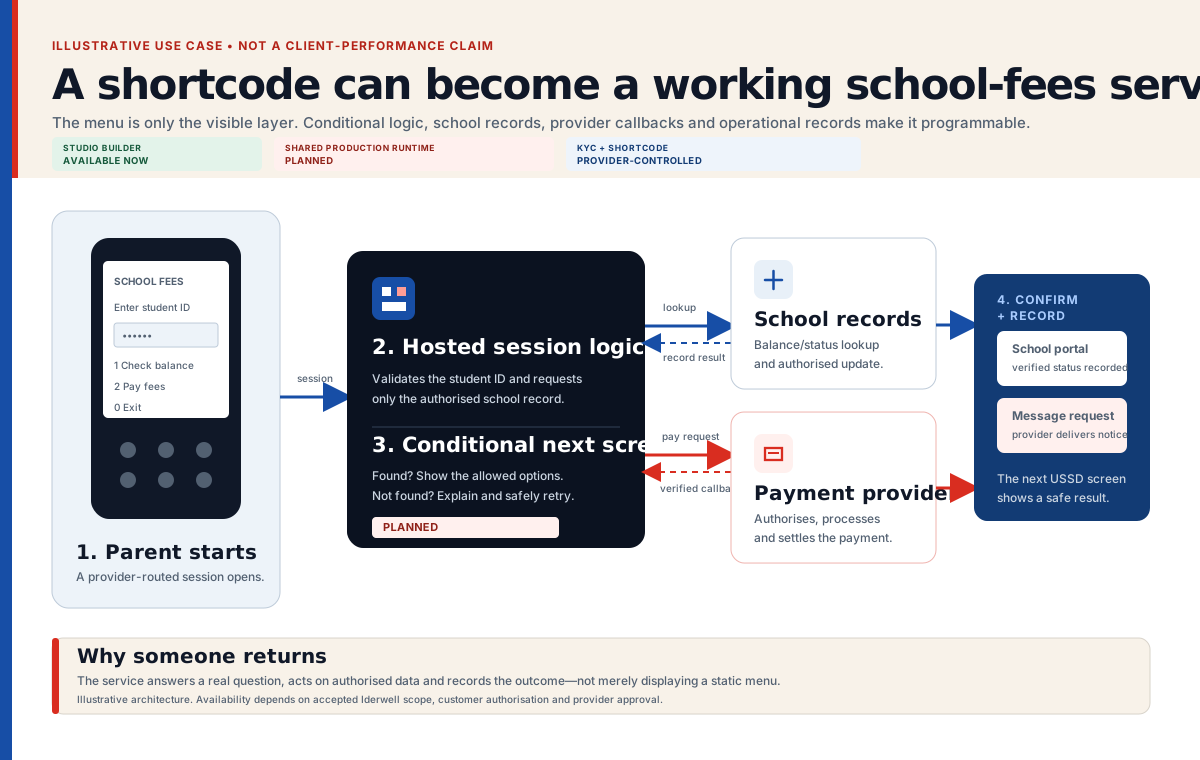
The caller enters a student reference in the USSD session.
A live implementation checks the supported school record and returns the useful account information.
The caller can review the result and follow an approved payment or support path.
A payment request is not treated as paid until the payment provider reports a verified result.
The software updates the correct account and may ask an approved SMS provider to send a receipt or status message.
What Iderwell provides
The public builder works today. Live telecom work remains a separately reviewed service with provider-controlled prerequisites.
Arrange menus, questions, typed answers, simulated payment and SMS steps, and clear endings without writing code.
Runs in the public browser alpha.Test every path, save the flow, export its definition and send a fixed read-only simulation to a teammate or client.
A verified free account is required for saved and shared work.The planned production layer would answer approved provider sessions after the required security, reliability and provider gates pass.
Not available for a new shared-Studio go-live order today.Design-partner scoping can define approved payment, SMS and business-record connections required by a future production service.
Prototype planning is available; the shared live connection is not yet available.The planned production platform would provide protected views for sessions, business records, provider states and exceptions.
The shared Studio operations portal is not built or available today.For the current reviewed Ghana path, Hubtel decides merchant approval, shortcode allocation, network rules and provider charges. Other provider paths are future.
Iderwell cannot guarantee provider approval.Useful language
These terms should help you understand a provider discussion. You do not need to memorise them before using Studio.
Common questions
The simple explanation and the technical definition can coexist.
No. The numbered screen is the interface. A programmable application can remember the current session, validate input, branch on rules, use supported business records and respond to provider results.
The customer uses the phone and mobile network, but the application logic normally runs on a server connected through an authorised USSD provider.
Yes. Iderwell USSD Studio can build and simulate supported flows in a browser. That test does not create a live network service or contact a provider.
No. The public alpha does not provide arbitrary HTTP or code nodes, automatic provider onboarding or universal live deployment. Supported live connections are reviewed and agreed separately.
A browser test makes scoping more precise, but you do not need one before applying as a founding design partner.